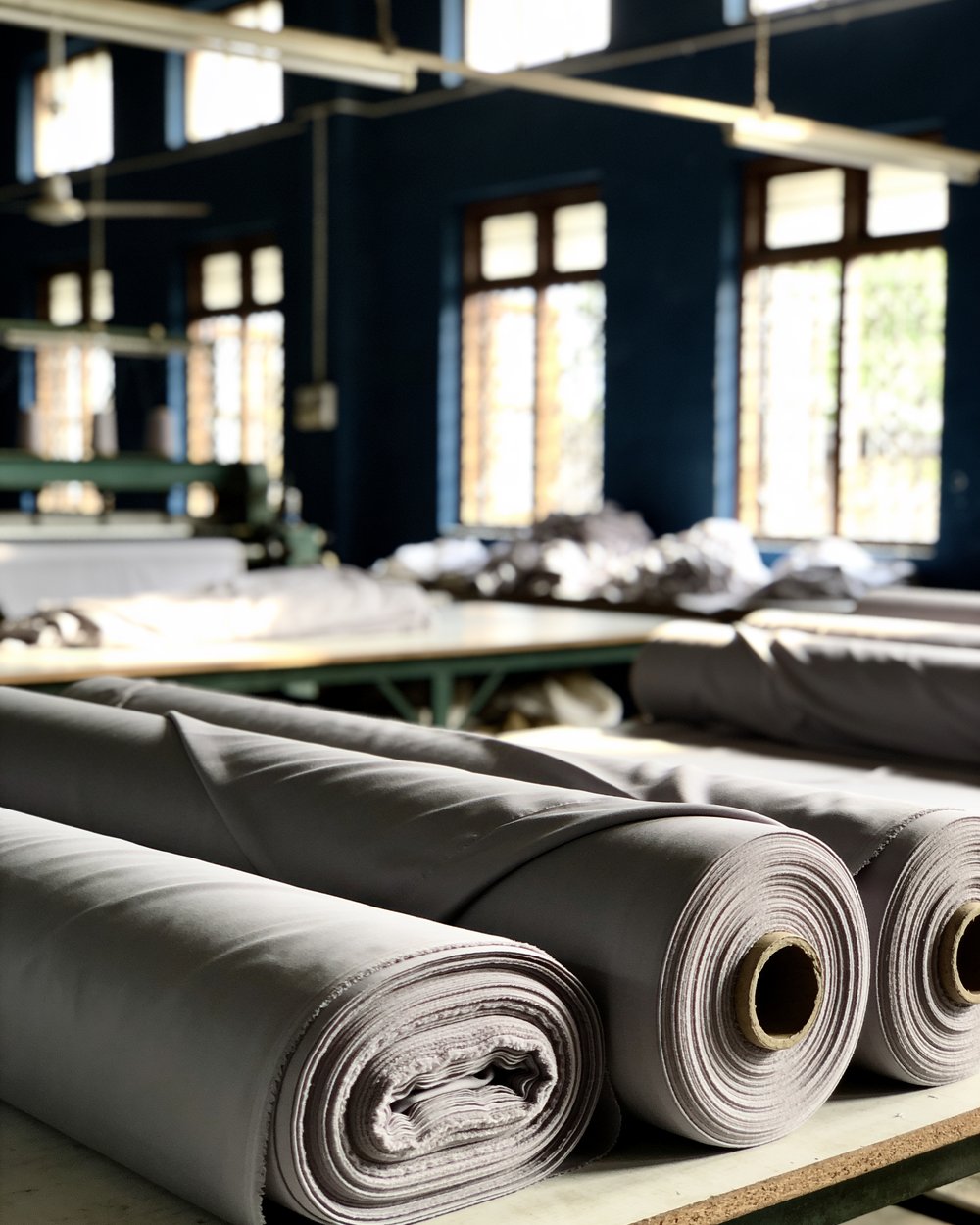

Fabric Technical
How to Read a Fabric Spec: GSM, Yarn Count & Construction
A plain-English guide to reading a fabric spec: what GSM means, how yarn count (Ne) works, how to decode a construction like 40x40 / 133x72, and GSM vs thread count.

Dyeing & Processing
Greige fabric is raw loom-state cloth; RFD fabric is scoured and bleached, ready for dyeing. Compare cost, lead time, dye readiness and use cases.
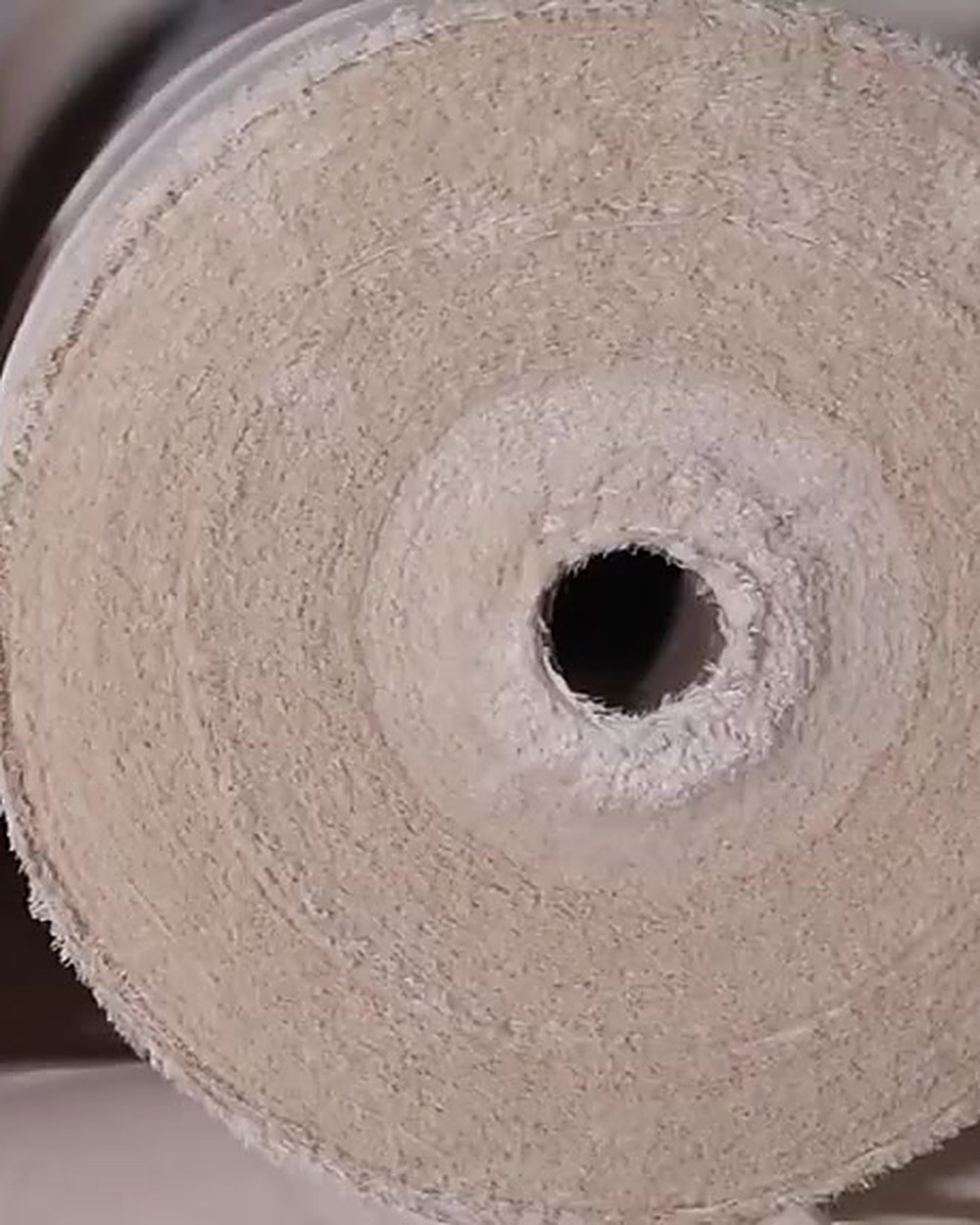
Greige fabric is raw, unfinished cloth taken directly off the loom, still carrying the natural waxes, oils and sizing chemicals used during weaving. RFD (ready-for-dyeing) fabric is the same cloth after it has been desized, scoured and bleached, so it is clean, absorbent and ready to accept dye without further preparation. The core difference between grey and RFD fabric is one processing stage: greige cannot be dyed directly, RFD can. Understanding that distinction helps you buy the right form, control cost and avoid uneven dyeing.
Greige fabric, also spelt “grey” or “gray” fabric, is woven or knitted cloth in its loom-state form, before any wet processing. The term covers everything that comes off the loom or knitting machine with no scouring, bleaching, dyeing or finishing applied. Woven greige is often called loom-state fabric for exactly this reason.
At this stage the cloth still holds natural cotton impurities such as waxes, pectins, oils, seed-coat fragments and dirt, plus the sizing chemicals added to the warp yarn to help it survive weaving. These give greige its dull, off-white or cream appearance. That is the real grey fabric meaning: “grey” describes the unprocessed condition, not a literal grey colour.
Greige is the base material for almost all finished cotton and blended fabric. It is graded on construction, and buyers assess it the same way they assess any woven cloth, by ends and picks per inch, yarn count, width, GSM and selvedge quality. Our guide to fabric GSM, count and construction breaks down those measurements in detail.
RFD stands for ready for dyeing, sometimes written as PFD (prepared for dyeing). It is greige fabric that has passed through preparatory wet processing so it can go straight into the dye bath. The typical sequence is:
The result is a clean, absorbent, uniformly white cloth. Because the fibre surface is now free of water-repellent waxes, dye penetrates evenly and the finished colour is brighter, more consistent and more colourfast. RFD fabric is, in effect, greige with the first processing step already done.
| Attribute | Greige (loom-state) fabric | RFD (ready for dyeing) fabric |
|---|---|---|
| Processing done | None; raw off the loom | Desized, scoured, bleached (sometimes mercerised) |
| Appearance | Off-white / cream, visible impurities | Clean, uniform white |
| Contains | Natural waxes, oils, pectins, sizing | Impurities and sizing removed |
| Dye readiness | Cannot be dyed directly | Ready for the dye bath |
| Dye uptake | Uneven, patchy, poor fastness | Even, bright, colourfast |
| Cost per metre | Lower (raw input) | Higher (processing added) |
| Lead time to dyeing | Longer; buyer must process first | Shorter; skip a step |
| Best for | Mills and units with their own processing | Buyers dyeing in-house or on tight deadlines |
The commercial logic is simple. Every dyed fabric has to be desized, scoured and bleached at some point. The only question is who does it and when. Buy greige and that work falls to you or your processing house. Buy RFD and the mill has already handled it before the cloth ships.
For a buyer without a scouring and bleaching line, RFD removes an entire outsourced stage, along with its handling, transport and coordination. That usually shortens the overall lead time and reduces the number of vendors involved. The trade-off is a higher price per metre, since the preparation cost is baked into the RFD rate rather than paid separately later.
Skipping preparation is not an option if you care about colour quality. Greige fabric’s waxes and sizing repel water, so dye sits unevenly and washes out. Scouring opens the fibre so it absorbs dye liquor uniformly, and bleaching removes the background tint that would otherwise shift the final shade. Wet processing also relaxes the fabric, so RFD reflects more of its true shrinkage than tightly sized greige.
Whichever form you buy, inspect it against the same fundamentals:
You can read more about how these specs are set and verified across our manufacturing capabilities.
Choose the form that matches your operation rather than defaulting to one.
Buy greige fabric when you:
Buy RFD fabric when you:
Many garment and knitwear units run a mix: greige for lines they process themselves, RFD for quick-turn or in-house dyeing programmes.
KSJ Spins and Weavers is a cotton and blended fabric manufacturer in the Erode–Tirupur textile belt of Tamil Nadu, India, with 40 looms in-house and mill capacity of around 800,000 metres per month. We weave cotton, poly-viscose, modal and poly-cotton fabric to your construction, in GSM roughly 80 to 330 and widths up to 63 inches, and supply it in either greige or RFD form to match how you process.
That means dyeing and processing houses can take loom-state cloth to run through their own lines, while garment units and exporters can take ready-for-dyeing fabric and go straight to colour. If you are sourcing from India and weighing suppliers, our overview of cotton fabric suppliers in Tamil Nadu covers what to look for. You can also see the full cotton fabric range.
What is the difference between greige and RFD fabric? Greige fabric is raw, loom-state cloth taken straight off the loom with its natural waxes, sizing and impurities intact, so it cannot be dyed directly. RFD (ready-for-dyeing) fabric has already been scoured and bleached to remove those impurities, giving it a clean, absorbent surface that accepts dye evenly without further preparation.
Why does grey fabric look grey if it is made from white cotton? Greige fabric is called grey because of its unprocessed state, not its literal colour. Loom-state cotton is usually off-white or cream, dulled by natural waxes, oils, seed fragments and the sizing chemicals added to protect the warp during weaving. Scouring and bleaching remove these, which is why RFD fabric looks clean and white.
Is RFD fabric more expensive than greige fabric? Yes. RFD fabric costs more per metre than greige because it has already been desized, scoured and bleached, adding processing, chemicals and handling. Greige is the cheaper raw input, but the buyer then pays separately for preparation. On a finished basis the totals are often close; RFD simply moves that cost and the processing step onto the mill.
Can you dye greige fabric directly? No. Greige fabric holds natural waxes, pectins, oils and sizing that repel water and block even dye uptake. Dyeing it directly produces patchy, uneven colour with poor fastness. It must first be desized, scoured and usually bleached, at which point it becomes RFD fabric and is ready to take dye.
When should a buyer choose RFD over greige fabric? Choose RFD when you want to skip in-house preparation, shorten lead time or lack a scouring and bleaching line, such as garment units dyeing in-house or on tight deadlines. Choose greige when you run your own processing, want maximum control over the finish, or are buying at volume where the lower raw cost matters most.
Need greige or RFD fabric woven to your construction? Contact the KSJ team to discuss your quality, GSM and volume requirements.
Keep reading
Fabric Technical
A plain-English guide to reading a fabric spec: what GSM means, how yarn count (Ne) works, how to decode a construction like 40x40 / 133x72, and GSM vs thread count.
Export & Wholesale
A practical guide for bulk buyers and exporters on sourcing cotton fabric from Tamil Nadu's Erode-Tirupur belt: how to evaluate mills, MOQs, lead times, and export readiness.
Apparel Manufacturing
Poly-viscose delivers fluid drape for womenswear, modal adds premium softness to knits, and poly-cotton gives shirting and workwear durability. Here is how to choose.
Send us your count, GSM, or construction — we'll quote against it directly.