Fabric Technical
How to Read a Fabric Spec: GSM, Yarn Count & Construction
A plain-English guide to reading a fabric spec: what GSM means, how yarn count (Ne) works, how to decode a construction like 40x40 / 133x72, and GSM vs thread count.
Apparel Manufacturing
Poly-viscose gives drape, modal gives softness, and poly-cotton gives durability. A B2B guide to choosing the right blended fabric for garments.
Choosing between poly viscose fabric, modal fabric and poly cotton fabric comes down to what the garment must do. Poly-viscose (PV) is the choice for fluid drape and a premium look in womenswear, dresses and uniforms. Modal is the softest of the three, ideal for next-to-skin knits, loungewear and premium tees. Poly-cotton (PC) is the workhorse for shirting, corporate uniforms and workwear, where durability, wrinkle recovery and low shrinkage matter more than drape. This guide explains the difference between modal and viscose, compares all three blended fabrics for garments, and helps buyers match construction to end-use.
Poly-viscose is a blend of polyester and viscose (a regenerated cellulose fibre from wood pulp). Viscose contributes a cool, silky feel and a heavy, fluid drape that reads as premium, while polyester adds tensile strength, wrinkle resistance and dimensional stability. A common ratio is 65% polyester to 35% viscose, though blends vary by end-use.
The result is a blended fabric for garments that hangs beautifully but resists the shrinkage and creasing that trouble pure viscose. PV prints and dyes well, making it popular for patterned dresses, blouses, skirts, linings and softer uniform ranges. Typical weights run from around 100 GSM for blouses to 200 to 220 GSM for suiting. If your line needs the look of viscose without the care headaches, PV fabric is usually the answer.
Modal is a type of rayon, a regenerated cellulose fibre spun from beech or other hardwood pulp. During manufacturing the fibres are stretched to increase molecular alignment, which gives modal its defining qualities: exceptional softness, a subtle sheen, and strength that holds up even when wet. Modal breathes like cotton and absorbs moisture efficiently, which is why it is favoured for innerwear, sleepwear, loungewear and premium knitted T-shirts.
Modal is frequently blended, most often with cotton, spandex or polyester, to tune stretch, structure and cost. On its own, modal fabric resists pilling and keeps its colour through many more wash cycles than standard viscose. For brands positioning on comfort and a luxurious next-to-skin feel, modal justifies its higher price tier.
Poly-cotton is a blend of polyester and cotton, most commonly 65/35 (polyester/cotton), though 50/50 and other ratios are used. Polyester provides abrasion resistance, wrinkle recovery and low shrinkage, while cotton keeps the fabric breathable and comfortable against the skin. This combination has become an industry standard for mass garment production.
Poly cotton fabric is the default for formal and casual shirting, corporate and school uniforms, and industrial workwear such as coveralls and trousers. It withstands repeated institutional laundering far better than 100% cotton, ironing needs drop sharply, and cost per metre is typically lower than pure cotton. PC fabric is available in plain weave and poplin for shirting (around 100 to 150 GSM) and in twill for bottom-weights and workwear (around 200 to 280 GSM).
This is the most common question buyers ask, because both fibres start from the same raw material. The difference between modal and viscose is in the spinning process. Modal fibres are stretched to align their molecules, so the finished fibre is finer, stronger and more stable.
In short, modal is the upgraded, more durable cousin of viscose. Choose viscose (or poly-viscose) for drape and cost; choose modal for softness, strength and colour retention.
| Property | Poly-viscose (PV) | Modal | Poly-cotton (PC) |
|---|---|---|---|
| Typical composition | 65% polyester / 35% viscose | 100% modal, or modal blends | 65% polyester / 35% cotton |
| Feel and drape | Silky, fluid, premium drape | Buttery soft, light, subtle sheen | Crisp, structured, breathable |
| Strength | High (polyester adds strength) | High, strong even when wet | Very high, abrasion resistant |
| Breathability | Moderate | Good, cotton-like | Good, cotton keeps it airy |
| Shrinkage | Low to moderate | Low | Lowest of the three |
| Wrinkle resistance | Good | Moderate | Excellent |
| Typical GSM | 100 to 220 | 120 to 220 | 100 to 280 |
| Typical end-uses | Womenswear, dresses, linings, uniforms | Innerwear, loungewear, premium knits, tees | Shirting, uniforms, workwear |
| Cost tier | Mid | Premium | Value to mid |
Match the blend to the job, not the trend.
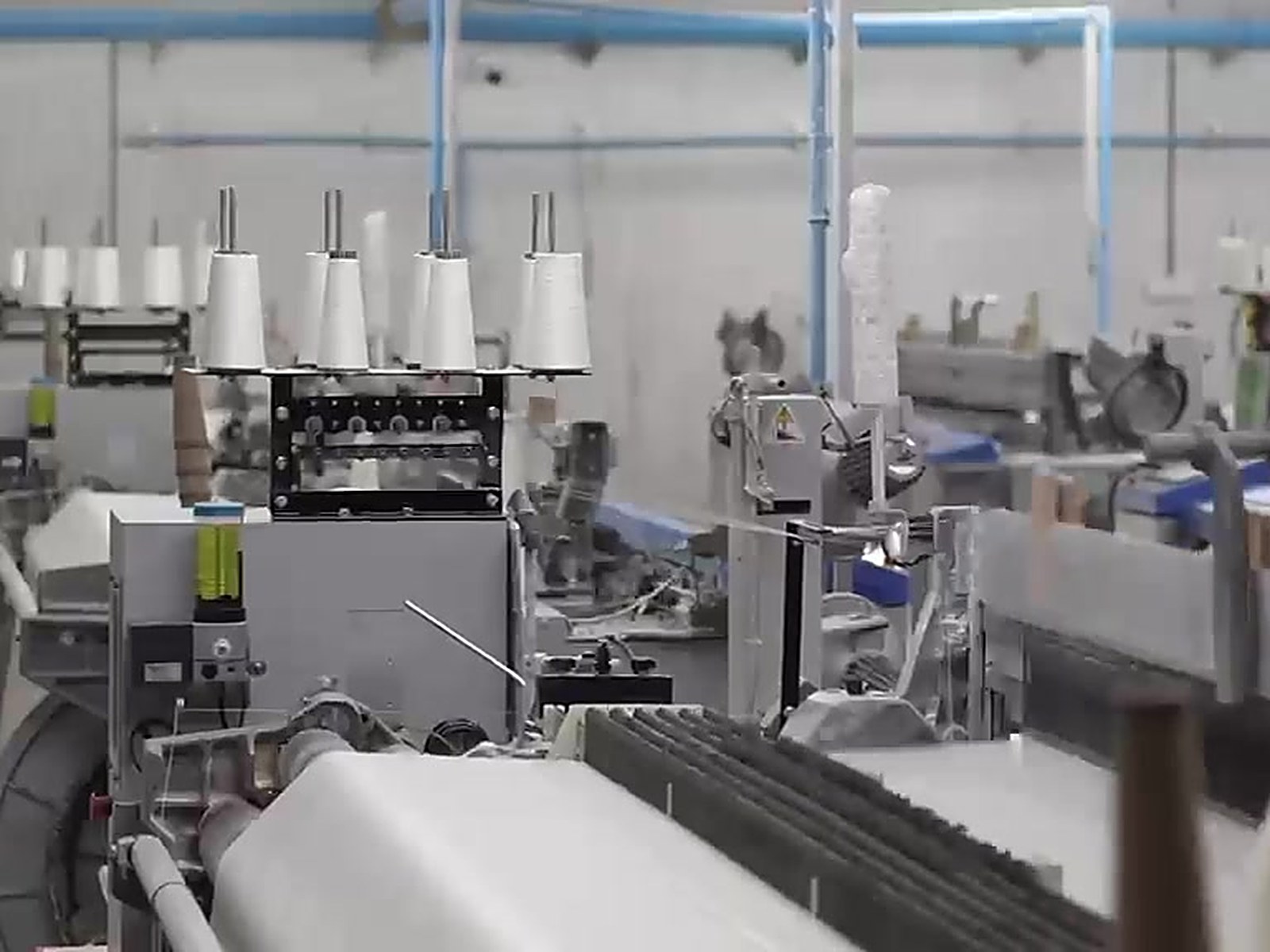
At KSJ Spins and Weavers, we weave cotton, poly-viscose, modal and poly-cotton to your construction, in greige or RFD, from roughly 80 to 330 GSM and widths up to 63 inches. With 40 looms and around 800,000 metres a month, we supply garment and knitwear units, dyeing houses, wholesalers, home-textile makers and exporters. If you are unsure which blend fits your programme, share your construction and end-use and we will recommend the right base.
What is the difference between modal and viscose? Modal and viscose are both regenerated cellulose fibres made from wood pulp, but modal is spun and stretched to align its molecules more tightly. That makes modal stronger, especially when wet, more resistant to pilling and shrinkage, and softer to the touch. Viscose offers a heavier, more fluid drape at a lower cost.
Is poly-viscose fabric good for garments? Yes. Poly-viscose (PV) blends the fluid drape and soft handle of viscose with the strength, wrinkle resistance and dimensional stability of polyester. It is widely used for womenswear, dresses, linings, uniforms and suiting where a premium look is needed without high shrinkage or heavy ironing. Typical weights run from 100 to 220 GSM.
What is poly-cotton fabric best used for? Poly-cotton (PC), often a 65/35 blend, is best for shirting, corporate uniforms, industrial workwear and institutional textiles. The polyester adds abrasion resistance, wrinkle recovery and low shrinkage, while cotton keeps the fabric breathable and comfortable. It survives repeated industrial washing better than 100% cotton.
Which blend shrinks the least: poly-viscose, modal, or poly-cotton? Poly-cotton shrinks the least because polyester acts as a stable scaffold that limits how much the cotton can contract. Modal is next, holding its shape better than standard viscose. Poly-viscose sits between them, with the polyester content controlling most of the shrinkage the viscose would otherwise show.
What GSM should I choose for shirting versus womenswear? For shirting and lightweight blouses, 100 to 150 GSM gives a professional drape while staying breathable. Womenswear and dresses in poly-viscose or modal usually sit around 120 to 200 GSM. Uniforms, twills and bottom-weight workwear in poly-cotton typically run 200 to 280 GSM for durability.
Need help matching a blend and construction to your garment programme? Contact KSJ Spins and Weavers with your specification and we will advise on the right base fabric and weight.
Keep reading
Fabric Technical
A plain-English guide to reading a fabric spec: what GSM means, how yarn count (Ne) works, how to decode a construction like 40x40 / 133x72, and GSM vs thread count.
Export & Wholesale
A practical guide for bulk buyers and exporters on sourcing cotton fabric from Tamil Nadu's Erode-Tirupur belt: how to evaluate mills, MOQs, lead times, and export readiness.
Dyeing & Processing
Greige is raw loom-state cloth; RFD is pretreated and ready for dyeing. Here is how the two compare on cost, lead time and dye readiness.
Send us your count, GSM, or construction — we'll quote against it directly.