Fabric Technical
How to Read a Fabric Spec: GSM, Yarn Count & Construction
A plain-English guide to reading a fabric spec: what GSM means, how yarn count (Ne) works, how to decode a construction like 40x40 / 133x72, and GSM vs thread count.

Export & Wholesale
Sourcing cotton fabric from Tamil Nadu? Why the Erode-Tirupur belt leads, how to vet a wholesale cotton fabric supplier, and what to check before you buy.

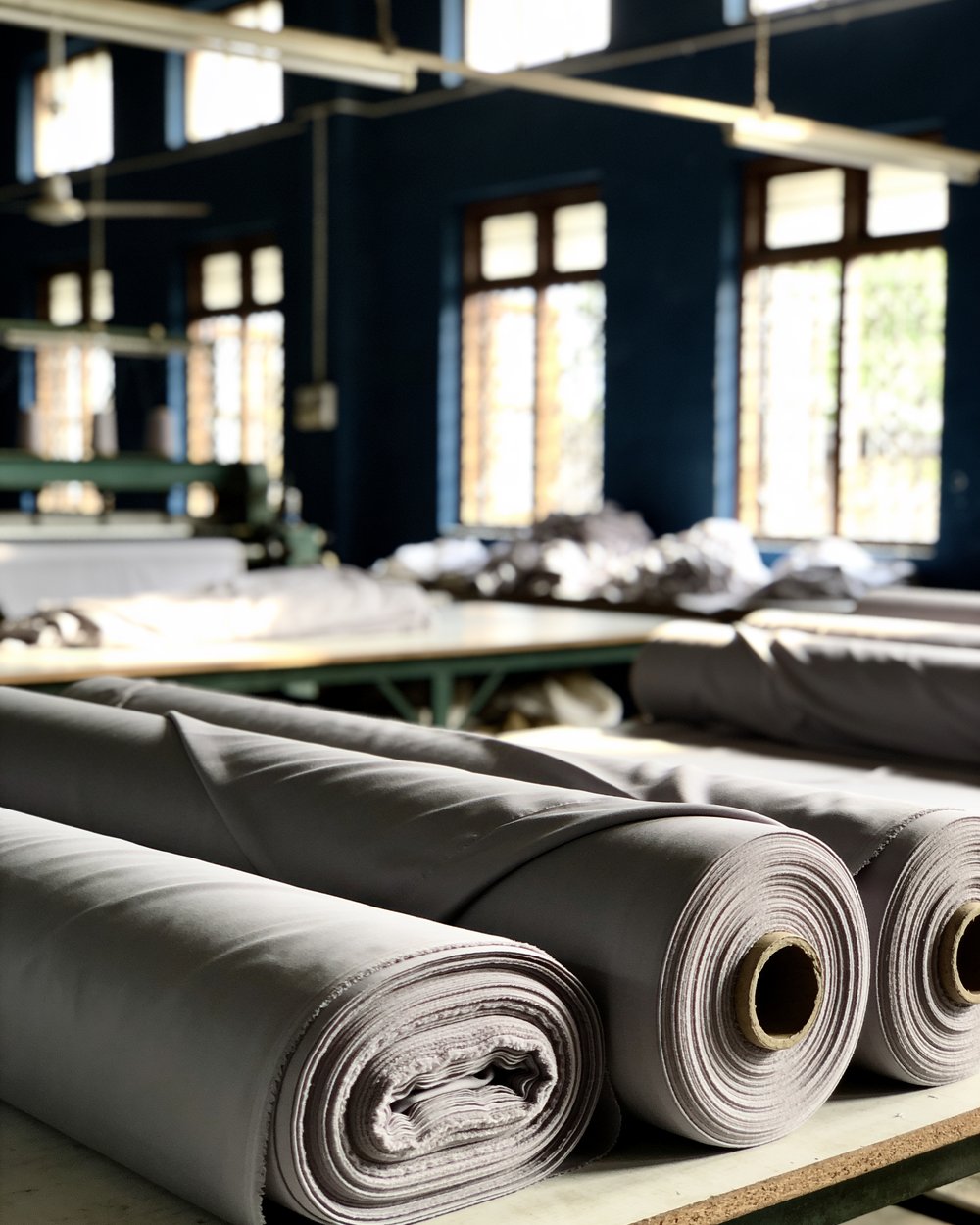
Tamil Nadu is India’s largest cotton fabric manufacturing base, and the Erode-Tirupur-Pallipalayam belt in the west of the state is where most bulk buyers and exporters concentrate their sourcing. The cluster combines spinning, weaving, and processing within a short radius along the Cauvery river, which keeps lead times short and construction options wide. If you want to buy cotton fabric in bulk, the practical questions are the same everywhere: who owns the looms, what qualities they can hold, and whether they are set up to export. This guide walks through how to evaluate a cotton fabric supplier in India before you place an order.
Tamil Nadu accounts for a large share of India’s spinning and weaving capacity, and the western districts of Erode, Tirupur, Coimbatore, Karur, and Namakkal form a self-contained textile ecosystem. Yarn, weaving, dyeing, and made-up units sit within a few hours of each other, so an order can move from beam to finished cloth without long transport gaps. That density is why international buyers of cotton fabric suppliers India return to this belt: construction flexibility, competitive pricing on volume, and a deep bench of mills to compare.
The belt is also export-mature. Many units are private limited companies with the registrations needed to ship abroad, with trade links through the Cotton Textiles Export Promotion Council (TEXPROCIL) and freight routes via Tuticorin and Chennai ports. For a wholesale cotton fabric supplier serving garment makers, dye houses, and home-textile brands, this mix of scale and export readiness is hard to match elsewhere in India.
Before you shortlist mills, be clear on the state of cloth you need. Greige (grey) fabric is unfinished cloth straight off the loom. It still carries sizing and natural oils, and it is what dye houses and processors buy to run their own finishing. A greige fabric manufacturer India is essentially selling loom output to construction. RFD (Ready for Dyeing) fabric has been scoured and prepared so it can go directly into dyeing or printing without further prep.
This choice changes your supplier list and your price. If you own or contract your finishing, greige gives you the most control and the lowest input cost. If you want cloth that is process-ready, ask for RFD. For a fuller breakdown, see our greige vs RFD fabric guide.
Loom technology affects fabric quality, width, and cost, so it is worth understanding what a mill runs.
A mill running a mix of all three can quote a wider spec range. As one example, KSJ Spins and Weavers in Kadachanallur, Pallipalayam, runs 40 looms in-house (35 automatic, 4 projector, 1 Toyota air-jet), producing around 800,000 metres a month across cotton, poly-viscose, modal, and poly-cotton. That mix shows why in-house capacity matters: the loom type is matched to the construction rather than the order being pushed onto whatever machine is free.
When you approach any mill in the Erode-Tirupur cluster, work through a consistent checklist. The table below is what to ask before committing to a wholesale cotton fabric supplier.
| What to ask | Why it matters | What good looks like |
|---|---|---|
| In-house loom count and type | Reveals real capacity vs outsourcing | Owned auto/projector/air-jet looms on site |
| Monthly output (metres) | Confirms they can hold your volume | Stated capacity with headroom over your order |
| Greige or RFD supply | Defines finishing responsibility | Clear answer, matched to your process |
| GSM and width range | Must fit your product | Documented range, e.g. GSM ~80-330, width to 63 in |
| Construction to spec | Shows they weave to order | Willing to weave your reed, pick, and count |
| MOQ per construction | Sets your order floor | Transparent MOQ per quality |
| Lead time | Affects your planning | Realistic 2-6 weeks by quality/finish |
| QC process | Protects consistency | Defined inspection, e.g. every metre checked |
| Export documentation | Enables shipping | GST, IEC, invoice, packing list, origin |
Always validate the answers against a physical sample. Order a hanger or short cut of the exact construction, then check GSM, width, hand-feel, and shrinkage yourself. A confident cotton fabric manufacturer in Tamil Nadu will send samples readily and weave to your construction rather than only offering stock qualities.
For bulk orders, most Erode-Tirupur mills quote MOQs between 300 and 1,000 metres per construction, though standard weaves can start lower and heavily customised qualities may sit higher. Loom-woven greige is often priced per beam or per construction, so confirm the MOQ against your specific quality and width. Lead times typically run two to six weeks depending on count, finish, and current loom loading. Plan sea freight at roughly 20 to 45 days in transit for container volumes, or air freight for urgent, smaller lots.
Export readiness is where sourcing succeeds or stalls. Confirm the supplier is GST-registered and holds an Importer-Exporter Code (IEC). Each shipment needs at minimum a commercial invoice, a packing list with net and gross weights, a bill of lading or air waybill, and a certificate of origin. Fabric exports are zero-rated under GST, and many mills hold TEXPROCIL membership for documentation support. Standard terms are TT with an advance and balance against shipping documents, or a letter of credit for larger orders.
The right construction depends on what you make. Garment makers, dye houses, wholesalers, home-textile brands, and exporters each need different GSM, width, and blend combinations. Cotton remains the core, but blends widen your options: poly-cotton for durability and easy care, modal and poly-viscose for drape and softness. Our blended fabric guide to poly-viscose, modal, and poly-cotton covers where each blend fits.
To see how construction, GSM, and width map to real qualities, browse our products range and manufacturing capabilities. If you want background on a working mill in the belt, our company overview sets out how in-house weaving and QC come together.
Where is the main cotton fabric manufacturing hub in Tamil Nadu? The Erode-Tirupur-Pallipalayam belt in western Tamil Nadu is India’s densest cotton weaving cluster. Concentrated around Erode, Tirupur, Karur, Namakkal, and the Coimbatore region, it houses thousands of spinning, weaving, and processing units producing greige and finished cotton fabric for domestic buyers and exporters worldwide.
What is the minimum order quantity for cotton fabric from India? Most Indian mills set MOQs between 300 and 1,000 metres per construction, though standard weaves like poplin, twill, and voile can start lower. Loom-woven greige fabric is often quoted per beam or per construction, so confirm the MOQ against the specific quality and width you need before committing.
What is the difference between greige and RFD cotton fabric? Greige (grey) fabric is unfinished cloth straight off the loom, still carrying natural oils and sizing. RFD (Ready for Dyeing) fabric has been scoured and prepared so it can go directly into dyeing or printing. Buyers who run their own dye houses usually source greige; those wanting process-ready cloth ask for RFD.
How do I verify a cotton fabric supplier in India before ordering? Ask for GST registration and company type, confirm in-house loom capacity versus outsourced weaving, request a physical hanger or sample against your construction, and check GSM, width, and shrinkage on that sample. For exports, confirm the supplier can issue a commercial invoice, packing list, and certificate of origin.
Can Tamil Nadu mills supply cotton fabric for export orders? Yes. Many Erode-Tirupur mills are GST-registered private limited companies set up for export, holding an Importer-Exporter Code and TEXPROCIL membership. They supply greige and RFD cotton, poly-cotton, and blends in container volumes with full export documentation, sea or air freight, and standard TT or LC payment terms.
Planning a bulk or export order from Tamil Nadu? Contact our team with your construction, GSM, and volume, and we will send matched samples and a quote.
Keep reading
Fabric Technical
A plain-English guide to reading a fabric spec: what GSM means, how yarn count (Ne) works, how to decode a construction like 40x40 / 133x72, and GSM vs thread count.
Apparel Manufacturing
Poly-viscose delivers fluid drape for womenswear, modal adds premium softness to knits, and poly-cotton gives shirting and workwear durability. Here is how to choose.
Dyeing & Processing
Greige is raw loom-state cloth; RFD is pretreated and ready for dyeing. Here is how the two compare on cost, lead time and dye readiness.
Send us your count, GSM, or construction — we'll quote against it directly.